
Brendon Babenzien
FOUNDER OF NOAH AND FORMER CREATIVE DIRECTOR OF SUPREME AND J.CREWI absolutely treasure Brendon. I’ve been thinking how serendipitous it is that the very first Dharma Talk for Okay Bless is with my first boss and mentor, Brendon Babenzien. Never in my life or my travels have I ever met anyone like B - the way he sees the world and moves through life is something I’ve always been in awe of and have admired deeply. Brendon is someone who’ll never ask much of you. Instead, he’ll take more of an interest in who you really are and the way in which you see the world, always leaving you somehow a better, kinder and a more decent human being. I find it rare to meet anyone who has the power to expand the way you think and who gives that gift freely and asks for nothing in return. That’s always been B.
And for so many reasons it feels right that we start everything here. To publish a conversation with someone who has shaped a lot of who I am and for the better. Both through our work and our friendship, I’ve been lucky enough to collect pieces of his wisdom and now feel incredibly grateful to have the opportunity to share that with all of you here on Okay Bless. I hope you enjoy our conversation as much I had having it, enjoy x
Let's start at life before supreme. I obviously know much about how you grew up but i think there's a lot value in sharing that with people here. I mean, there’s a lot before Supreme. I guess it all depends on who you’re talking to. I grew up in Long Island and for me, my interests have never changed since I was little - like single digits little. I started skateboarding in 1976 when I was five and I’ve lived many of my own lives through that alone and seen the industry change so much in that span. But musically and stylistically, nothing much has really changed with me. Is that a little weird? Even if you look at pictures of me, I’m wearing the same kind of clothes and am into the same kind of things.
So skating at five. Boogie boarding in third grade or fourth grade I guess. And back then, you were dropped off at the ferry to Fire Island where you went over by yourselves and got picked up at the end of the day. You were on your own all day at the beach, it was like Lord of the Flies. I learned how to surf when I was 12? And then skateboarding all throughout that.
DID YOU COME INTO THE CITY MUCH FROM LONG ISLAND WHEN YOU WERE GROWING UP?I started coming in with my grandmother. She'd be like, we're going to see a play, The Nutcracker or I’m going to take you for dinner or whatever. But I was a child, you know? By the time I was 13, we were kind of on our own and we just did whatever the hell we wanted. I got a job at a surf and skate shop in Long Island and started meeting different kids and getting into skateboarding and getting really into surfing and music.
Some of us would just hop on a train to Manhattan and you wouldn’t really know where you were going. You just went. We would come to the city to skate, shop, buy records, and look for t-shirts, hats, whatever we could afford. It was an interesting time - we’re talking about 1984, I was 13. Obviously everything was analog, so shops really mattered. And when I say shops, it's everything from skate to surf to boutiques to record stores, independent businesses who thought for themselves really mattered.
The things that I was interested in weren't available as commercially as they are now. For example, a brand like Supreme wouldn't have been known about. You had to know where to go to find these things. There was this ten year window from like ‘84 to ‘94 where it feels like everything that happened and went down back then actually planted the seeds for the way everything is now. Like skateboarding was getting big. Surfing was getting big and there was this crossover with music that was happening like nightlife. And I’m lucky because my friends and I were the right age to experience those things. Punk rock, post-punk, new wave, hip hop - we were at that age where you absorbed everything like a sponge.
HOW DID YOU GO FROM SUBURBAN LONG ISLAND TO NEW YORK AND WORKING IN DESIGN AND PRODUCT TO THE SCALE IN WHICH YOU DID?I mean, as a skateboarder, I think there's an innate connection to style, whether you’re even conscious of it or not. I don't necessarily mean how you're dressing, it's more how you carry yourself and how you do things. That seems to be innate in most skateboarders, like part of some DNA and probably why they gravitate towards skateboarding in the first place. So there’s that, that already existed.
I think for me in particular, I was just really interested in style. Like what does a trick look like? How do you move down the street? How do you walk? How do you talk? All of those things were interesting to me through the lens of skateboarding. Then getting the job at the shop gave me real exposure to being a part of something. I was 13 and hired to fold t-shirts and put together skateboards but by 15, I was buying for the store. I was going to trade shows and doing the buys for Quiksilver and buying everything from clothing brands to skateboards to surfboards, wetsuits, you name it, I became a part of the whole thing. That's when I think I started to recognize that I naturally had a sense if something was good or not, or if something had the potential to be good and the intuitive hit to be like - oh we should do that, that's cool. And that became part of my job.
I had a great job and I knew I was good at what I was doing. I was good at things that I tried and I always knew if I put my mind to something, I could do it. I was always the kid that if I wanted to do well in school, I did well in school. If I didn't, I didn't and it was my choice. But I hadn't really landed on what I was going to be yet so I was still living in this funny universe. It was really interesting because I kind of lived in these two worlds. I was really into skateboarding and music but I was also living in Long Island and playing lacrosse. So there was a strange double life.
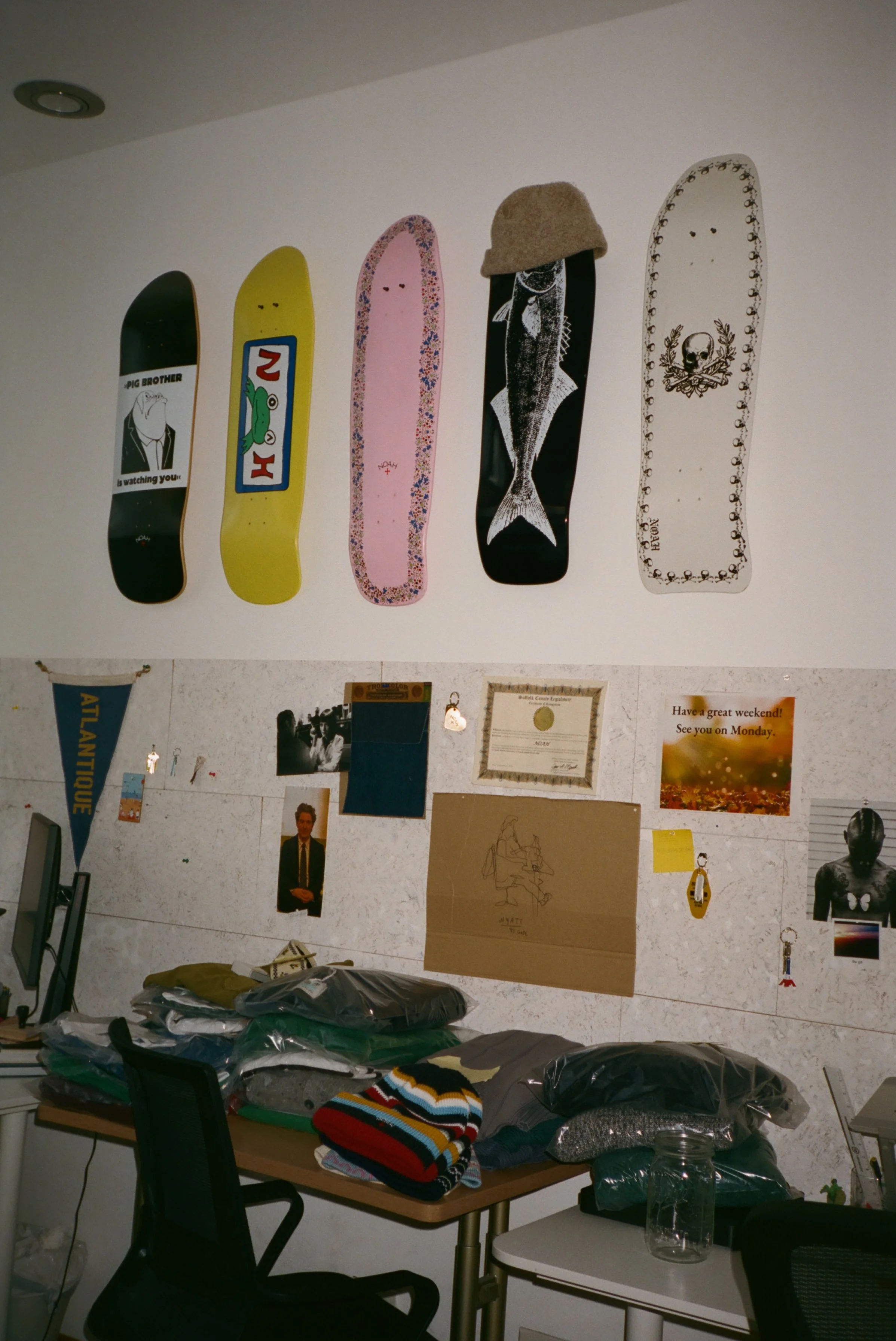
LACROSSE?Yeah and I was serious about it. I was really good at it. It's crazy but I went to college to play lacrosse. I was told by my guidance counselor, you're really smart and you're a preppy kid and you should go to college and play. So I went to Gettysburg College, a tiny little school in Gettysburg, Pennsylvania. We were number two in the country division three in lacrosse and every single person wore khaki shorts, a white shirt and aviator sunglasses.
THEN WHAT HAPPENED?I hated it. I left. I went for a year and was like, these are not my people and this is not my thing. One day I was like, wait, there's nothing here for me. I could have probably won a national championship but I always knew that wasn’t going to be my life so to be in a place I hated just for lacrosse, that didn't make any sense. I was struggling with it in my freshman year because academically, the school was really hard and lacrosse is very demanding when you're playing for a team that's going for a national championship. I had mandatory study halls, mandatory weight room, like I had to go to the weight room. Imagine me in the weight room three days a week, lifting weights? So at some point I went to the coach and was like, look, I don't know about varsity for me, I think I need to stay JV for another year and he was like, no, I need to pull you up and I realized at that point, that guy didn't give a shit about me. I kind of got bitter around education and the system after that and just left. I didn't go back.
I FIND THAT MOST PEOPLE CAN TALK THEMSELVES INTO STAYING IN SPACES OR CAREERS THAT DON'T ALIGN WITH THEM IN ANY WAY, MYSELF INCLUDED. THEN YOU COME TO POINT WHERE YOU REALIZE YOU'VE MOVED SO FAR OFF COURSE THAT THE THINGS THAT MAKE YOU HAPPY OR YOU ACTUALLY ENJOY DOING SUDDENLY SEEM SO FAR AWAY. DO YOU EVER REGRET LEAVING LONG ISLAND? OR EVER IMAGINE A LIFE WHERE YOU STAYED?Sometimes I kind of regret not just staying there because I think I could have taken over the shop if I had wanted to. Maybe that would have been the best case scenario. Stay there, run the shop, open at noon, hang out with kids, surf and skate and that's it. That's the job. Like my old boss, he had it all figured out. Check the waves in the morning, go open up the shop then in the afternoon, the kids start coming in and keeps you young.
But I had to get out of Long island. That was the one thing, I mean, I love going back now we have a house but if I had never left, I would be a very different person today. You need to leave a place like that.
i had a friend call me the other day. they live in sydney and was feeling frustrated with their career, feeling like they kept hitting the same wall because the level in which they wanted to be working AND CREATING wasn't AVAILABLE to them as the industry there is quite small. they had once moved over here to the states but moved back AFTER A MONTH OR TWO because they missed the comforts of home and NOW THEY'RE TOYING WITH REGRET AND ALL THE WHAT IFS.

YOU KNOW, I'D always framed leaving HOME as A sacrifice. you leave something VERY KNOWN AND COMFORTABLE to gain something else. IT'S A TRADE AND YOU HAVE TO WANT TO MAKE IT.  WITHIN THAT - YOU ALMOST HAVE TO DECIDE TO BE OKAY WITH KNOWING THAT IT MIGHT BE harder oR the gratification MIGHT TAKE years longer BUT YOU'RE OPEN TO WELCOMING IT AND ENDURING ALL OF IT because THE WANT FOR WHATEVER IT IS YOU'RE SEEKING IS BIGGER THAN THAT YOU'RE WILLING TO LOSE.
Yeah but also, some people might not like to be living in my situation or leave home for it. They might want a life living where they grew up but some people need to escape where they're from. They need to. They need to go because they are not fitting in where they're from and that was the case for me. But not on some emergency level. I'm a straight white guy from a town that was mostly straight white people. You know what I mean? I wasn't being persecuted. But I just wasn't comfortable. I love my friends still today but the rest of the community wasn't my community. So there wasn't enough to keep me there. I feel like for me, there was an element of sacrifice for sure. Like you could have had this really easy, simple thing because as you know, when you leave, things get a lot more complex. But then I wouldn't be here, doing this. And I enjoy this. It’s simple.
WHEN YOU MADE THE DECISION TO LEAVE - DID YOU EVER QUESTION IT? DO YOU EVER QUESTION THE CHOICES YOU MAKE?Oh constantly. I mean I don't think I've ever reached the point where I'm always 100% confident in my choice awareness. But you do it anyway. Some trust and some innate thing that's they're telling you to do things, at some point you have to put your faith into something, you know. And just go with it.
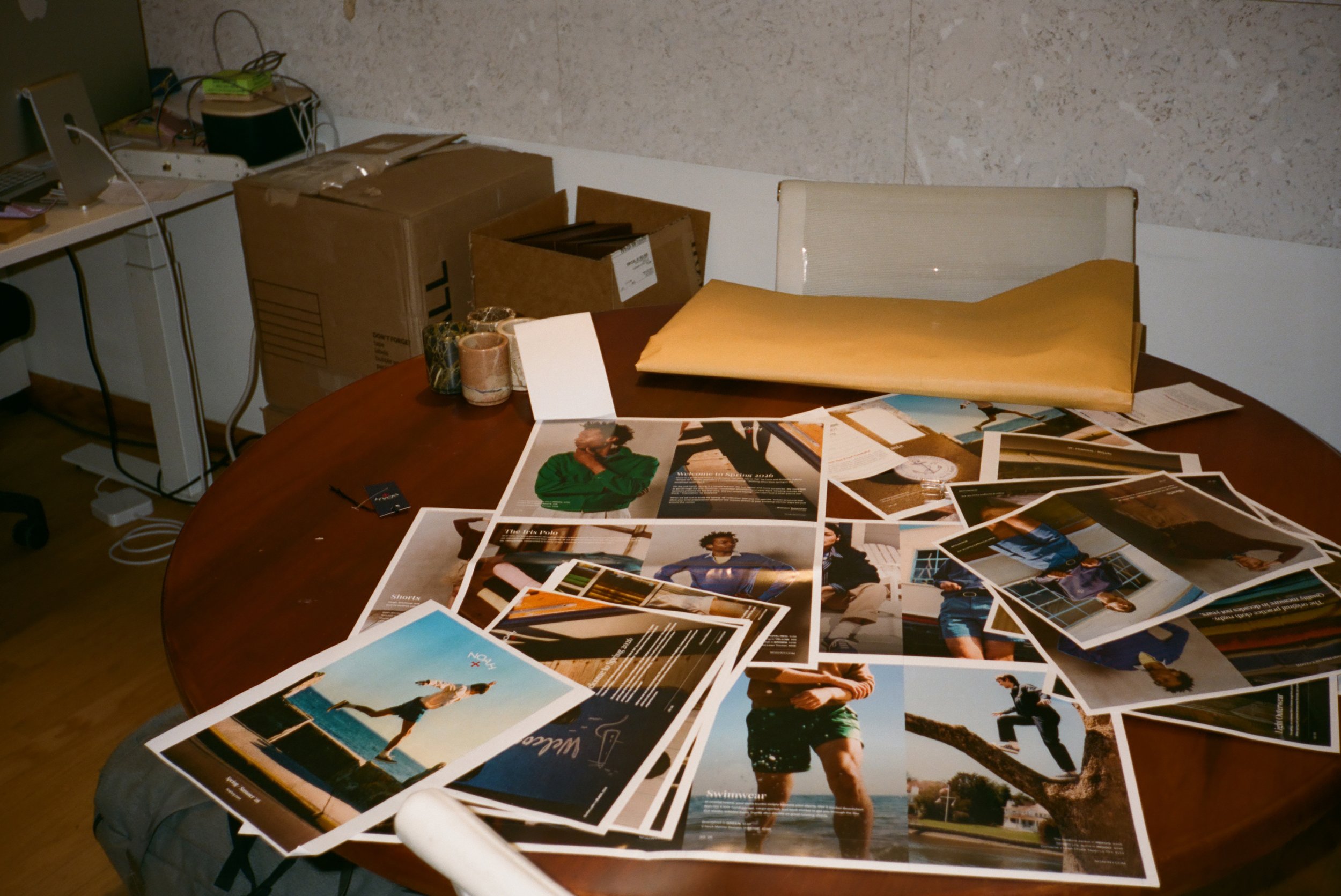
WOULD YOU CALL THAT INTUITION?I don’t know, it could be. But we’re always battling, right? You have one thing you feel, but you're also battling all the other influences and voices that are pulling you in directions that maybe aren't right for you. Like, you should stay and do this, or stay and try that, even if you’re unhappy.
Then that presents itself as panic attacks or whatever, depression, all kinds of things, because you're not 100% living the life you should or could be. One of the things I cared about was the ocean and there was no ocean in sight. It was all land in Pennsylvania. I didn't realize how much that was going to impact me. All the things I loved like music and the things that I identified with, none of it was happening where I was. People were like - are you sure about this? But at that point, it was normal for me to make the odd choice. So I left.
I ASK THAT BECAUSE I FEEL LIKE A LOT OF PEOPLE TAKE THE SAFE BET WHEN THEY'RE PRESENTED WITH A CHOICE. AND LATER WE SEE THE RESULT OF SOME OF THAT MANIFEST AS FEELINGS OF FEELING DEPRESSED, REGRET, UNINSPIRED OR ANYTHING ELSE THAT COMES WITH THAT TERRITORY.

I MEAN, I UNDERSTAND IT MIGHT BE EASIER TO TAKE RISKS IF IN ONE WAY OR ANOTHER YOU COME FROM THE PRIVILEGE OF KNOWING THAT YOU HAVE SOME SENSE OF SECURITY YOU CAN FALL BACK ON. I KNOW YOU NEVER HAD THAT GROWING UP, NOR ANY ACCESS TO WEALTH OR ANY HAND OUTS BUT YOU STILL ALWAYS TOOK THE BOLDER CHOICE IF IT FELT RIGHT TO YOU. EVERYTHING YOU BUILT FOR YOURSELF CAME WITH A RISK BUT YOU ALWAYS DID IT ANYWAY - WHY?
I mean there’s so many things to unpack there. Yes, most people are living lives that maybe aren't their ideal. That’s for sure but the flip-side to that is there are people who you and I would look at and say, they’re not living their full life but that’s because we’re looking at it through our lens. To some of those people, their jobs are the least important part of their lives. They love their friends and their family and the job is just the thing to pay for their life so they can just enjoy themselves. There’s that reality too, for sure, but I think that subset of people is incredibly small. I think most people are doing jobs they don't love and it makes their life hard and they don’t have a lot of choice. I think where we’re at in the larger history of humankind, is that a lot of people do what they have to do and even that for a lot of people today isn’t enough.
It isn’t enough to afford anyone a reasonable comfortable life where they can feel safe and have a home and good healthcare and all the things they need to feel whole. Most people don’t even have the minimum and their struggling and that’s the real issue. In that way, I feel grateful because I never felt at risk. There’s also a personality component too where maybe I was lucky to be born with a personality where risk never felt like a huge factor for me. Putting myself in situations that weren't the best but I was always willing to do it anyway. Like living with seven people in a shanty wasn’t exactly the safest choice but to me it didn’t matter. And getting the job at Supreme and knowing that I didn’t have the skills to do the job at first but I knew I would figure it out. Now that isn’t the best choice or way to do things but to me, it was okay. And then starting my own business, it takes a certain personality type to just accept that risk and not everyone has that. It’s not something everyone can do comfortably.
AND WHAT DO YOU THINK THAT IS? WHY DO YOU HAVE IT AND SOME DON't?I think it’s a combination of things. I think part of it is - we always look at the results. We look at the person, for example let’s talk about skateboarders. Skateboarders tend to always be a creative type of person. And that’s where we often leave it - like end of conversation. But what I’m interested in is why? What’s inside of them before you even recognize that they’re creative - what drives them to be that before they decide to become skateboarders? You know? What type of person goes to skateboarding in the first place? Creativity does comes first, and skateboarding is appealing to them because it is so creative and unique and there’s no rules or teams. You just go out and do it and you do it when you want to do it and you do it with the people you want to do it with and that’s it. Nothing is set and I think I come from that mentality so as a skateboarder, the creativity and the interest in living a specific way, a unique way, your own way always comes first. The fuck it part in taking a risk is just a result of that.
DO YOU EVER HAVE A PLAN B? IF EVERYTHING GOES TO SHIT.Not really, no. I mean at this stage in my career I could probably get a job. If I said hey I’m starting a consulting firm if anyone wants to talk, call me, I’m sure I could get some people to call and maybe that would be the Plan B? But that’s the other thing, my decisions have never been made just to make money and that’s a really important part of all this. What I’m doing - it’s a cultural thing for me. The things we talk about or the things we do in the business, those are things I’m really interested in in my real life. So like a Plan B or any plan that wouldn’t include those things wouldn’t be a plan at all - that’s not living.
I think about money, I mean I don’t think you can not think about money especially when you’re running a business but it was never the driving force. We were never like, how do we make as much money as possible - how do crush it financially? It was always, how do we build a life that has meaning and how do we build a business that has meaning. And say the money isn’t all there, how can we still be happy and proud of what we’re doing? And that’s the difference when we start to talk about art and commerce.
I’ll give you an example. This morning someone at the office emailed me this brand. I don’t know who the founders are maybe some tech guys and they built this brand and if you look at their look book, you can easily see NOAH in every photo - the same type of photography, product, casting and 100% of everything that we’ve been doing including things like poetry. When you look at it, you know these guys don’t give a shit about living the life behind the brand. It doesn’t matter to them, and I don’t know how many people in the world can tell a difference or how many people in the world care but there is a difference and it’s important to know that difference. NOAH comes from a place of authenticity - I surfed this morning before my first meeting in New York, but there are people making brands and faking their whole presentation to make money - without any of it being their real life. It’s temporary and soon they’ll move onto something else.
When an artist paints a canvas white with intention, it’s art - and someone else just shows you a white canvas because they want to make money, that’s not art. And society has got to know the difference in order for things to have meaning again. Because if brands can copy each other, make things cheaper in China, without any purpose or intention and people are just okay with that, then we lose our meaning. Nothing has value. A band can make music and it can be the best thing in the world but until there’s an audience giving energy back, it doesn’t mean anything. The work that we do loses meaning if the public can’t recognize the difference. The audience is as important as the artist and we have to start acknowledging that.
REMEMBER WHEN WE TALKED ABOUT LEAVING OUR HOME TOWNS AND COMPARED OUR LIVES TO WHAT COULD HAVE BEEN? YOU SPOKE ABOUT HOW YOU FIND YOURSELF COMPARING YOURSELF TO OTHER PEOPLE AND OTHER SUCCESSES AND THAT SURPRISED ME BECAUSE AS A WOMAN, I THOUGHT THAT WAS SOMETHING WE JUST WENT THROUGH AND HOPEFULLY GREW OUT OF BY OUR 50S. IT REALLY SURPRISED ME TO HEAR THAT KIND OF SOCIAL NOISE HAS AFFECTED YOU AS WELL?I mean it’s impossible to not care. You can’t go through the day without measuring yourself against something. You need a gage of some sort. I think it’s important to recognize measuring yourself against things to get context of where you’re at - that isn’t the worst thing. Sometimes I find myself being like, how did they make so much money? And look at their house, my house is so small! But that’s going to happen naturally in our society but what’s important is when you find yourself being pulled into that, stopping yourself and asking, wait - do I actually give a shit? And I don’t. I don’t give a shit.
It’s almost impossible not too, but whether you give into it is the important variable. Stop and ask yourself - do I really care? So they got a big house and five cars, and I’ve been trained to care, I’ve been taught to care. But by myself, alone in my room, I realize I couldn’t give a shit. If I had 100 million dollars tomorrow I wouldn’t even buy a new car. I mean okay, my family might demand a new car, for sure, that’s different and that’s fine but I don’t need that. Comparing yourself is almost inevitable. But it’s about whether you allow yourself to care, or feel impacted - is it making you feel uncomfortable? Or making you feel insecure or like you failed? It’s those things that get you. It’s important to feel good about your choices and not buy into the bigger capitalist ideals that are here to teach us that if we don’t have these things, we don’t have value.
MOST OF US KNOW WE SHOULDN'T FEEL THAT WAY BUT IT'S A WHOLE OTHER THING TO ACTUALLY FEEL AND EMBODY THAT.Well I can arrive at the I don’t care from multiple places. It’s not a single event. There’s a truth that I’m not interested in the same things as others. People who are interested might have been taught to be interested in the automobile or the house, or maybe the watch your wearing and all that shit, but I’m genuinely not interested in those things. They don’t bring any value to my life and I’ve never wanted or cared for a fancy watch and for that I know I’m somewhat lucky. Maybe some of that is my punk rock upbringing because I didn’t want to fit in and the whole point was not to, so I can arrive at it from there and there’s gratitude of course for my family and my small home, and the little mini we’ve been driving for years and keep leasing. You can arrive at it from being grateful for the things you do have or from genuinely not caring about the things other people are interested in. Most of those people don’t care either - they just don’t have the strength to admit it. They are leaning on the status of things whether it’d be a job or whatever, everyone is looking for status and maybe they lean on it because they don’t have enough other shit going on outside of that. I love to surf and put way more value in the fact that I’m 54 years old and I’m surfing a short board that’s 5’4 and surfing pretty good if not better that kids younger than my age. Thats more valuable to me than any watch.
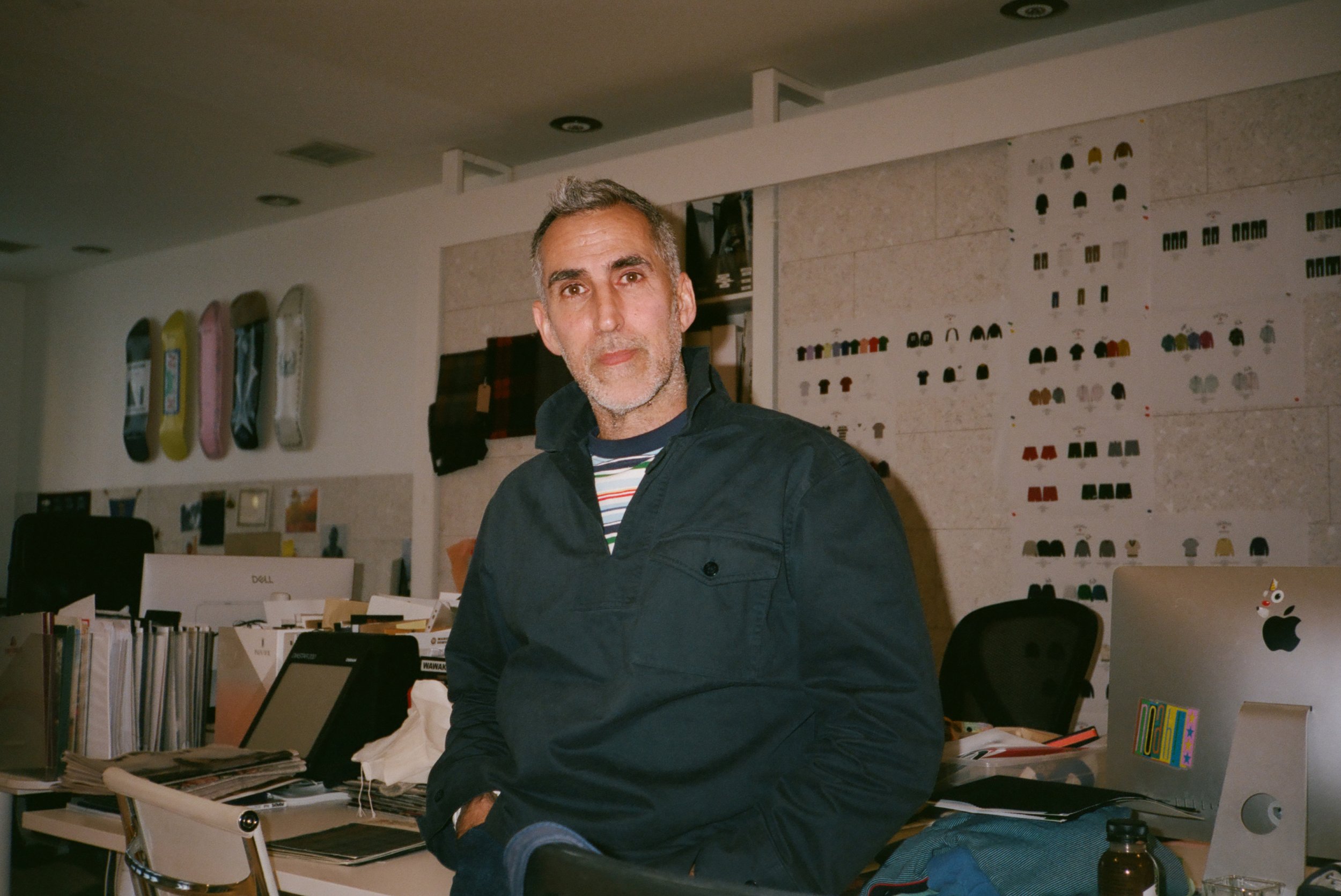
I REALLY LIKE THAT PERSPECTIVE ON THE MEASURE OF VALUE AND ABSOLUTELY AGREE, I FEEL THE SAME. DO YOU THINK PEOPLE COULD PIN IT DOWN TO SOMETHING AS SIMPLE AS HAVING A HOBBY?Well there is definitely some truth to that. If you have interests and things you love to do, you find value in doing them and the other things aren’t as necessary to fill a void. I would agree with you that people who do things, probably have a more stable view of the world in terms of how they fit into it but context also matters. Let’s look at it like this. I’m out East in the Hamptons in Long Island. So whereever you are, different things matter. Out here, to some people, what you wear and what you drive really fucking matters right? But take those same people and bring them to a ski resort and the guy that has two nickels in his pocket but is the best skier - well now, he’s a hero. Socially speaking, that best skier on the mountain is a superstar but he might not be making much financially. He might be a bartender or a lift operator but he skis better than anybody and in that context, he or she has tremendous value. People could be like, dam I wish I could ski that good, I’m just a rich loser. This guy committed his whole life to skiing and look how good he is - and he works nights as a bartender, meeting new people and skis all day and some people would look at that and be like, that looks like a great life. So you know context matters and some people lose sight of the value they have to offer in some other way. And sometimes all the money in the world can’t buy or change that fact.
I WANT TO END ON SOMETHING WE SPOKE ABOUT EARLIER, ABOUT PUTTING YOUR FAITH IN SOMETHING. I'VE ALWAYS THOUGHT THAT THE UNIVERSE, OR WHATEVER YOU WANT TO CALL IT, SPEAKS TO US THROUGH OUR INTUITION - THOSE GUT FEELINGS WE HAVE. ALMOST LIKE THEY'RE THE BREADCRUMBS OR THE COMPASS THAT STEERS YOU TOWARDS WHAT'S MEANT FOR YOU OR WHAT YOU WERE MEANT TO ALIGN WITH. THAT TO ME IS FAITH. TO ME, TRUSTING YOUR INTUITION IS ONE OF THE HIGHEST FORMS OF FAITH YOU CAN PRACTICE.

SO WHEN YOU SAID YOU WOULD BE NOTHING IF YOU DIDN'T PUT YOUR FAITH INTO SOMETHING, WHAT DID YOU MEAN BY THAT?
I mean look, if you don’t have some trust in things or faith or whatever word you want to use and you are only operating on let’s call it data, for lack of a better word - that's where the safety component comes in right? You’re operating your whole life and its choices on things that have already happened, things that are provable, on paper, and if that’s the case, then you could say you’re kind of living an incredibly limited existence. If there’s no risk, and if you’re only operating on things that you concretely know or think you know or think you can predict, then that doesn’t feel like much like living. Because there’s no newness there. There can’t be newness if everything is known.
There's this quote i love by this comedian kyle cease WHERE HE said something like - you don't take the risk because you can't yet measure what you will gain, you can only measure what you will lose.

meaning in the present, you can only measure the things you would lose (THE DATA YOU SPOKE ABOUT, OR THINGS THAT YOU ALREADY HAVE OR CAN BE PROVEN) - like your apartment, job or friendships, if say, you were decidING to MAKE A move overseas. but because we are unable to predict the future - what we will gain from that move AND THE POSSIBILITY THAT IT COULD BE 100X THE RETURN OR THE LIFE YOU'VE WANTED TO CALL IN, can't be measured yet BECAUSE IT HASN't HAPPENED. people TEND TO SUPPRESS THEIR DESIRES OR INTUITION AND MAKE CALLS FROM THE FEAR OF FAILING RATHER THAN THE YET UNSEEN POSSIBILITIES OF GAIN. I MEAN, THIS IS WHAT WE're TALKING ABOUT RIGHT?
I mean yeah, the reliance on data can be incredibly helpful - it’s real, it already happened. But also, you can’t predict the future and that can be applied to life or to business, that’s one thing we can’t escape and it’s that there is always going to be change, without fail. So if data or living from things that are predictable or can be proven is your only touchpoint or resource in making a decision or carving out a path in how you’re going to live your life, then you have to ask yourself what are you really doing? Because if that’s the case, you’re really losing out on a life that could be incredible.
On some level it feels like part of what we’re supposed to do is seek new things. Whether it be discoveries or adventures or whatever is your version of that but that does seem like part of humanity and its purpose. There are discoveries that are amazing and some discoveries in history that have led to terrible things. But it does feel like that’s part of the human spirit and to not operate that way in some part of your life would seem like you’re not really fulfilling your role here as a species.